Research Article | | Peer-Reviewed

Information Technology Alignment as an Institutional Lever for Service Excellence: Evidence from Occupational Retirement Benefits Schemes in Kenya

Received: 30 January 2026     Accepted: 11 February 2026     Published: 27 February 2026
Views:       Downloads:
Abstract

Occupational retirement benefits schemes are essential in safeguarding the post-retirement financial wellbeing of members which contributes to enhanced economic inclusion and social security. The difference between the rising retirement contributions and the low pension coverage in Kenya indicates that there are service delivery problems, especially in the areas of responsiveness and dependability. Even though reforms are still going on, the problem of delayed benefit payouts and the lack of assurance on membership rights remain as the biggest issues in the pension industry. These problems reveal that the Kenyan occupational retirement benefit schemes are still not responsive, timely and reliable. The main objective of the research was to find out the role of information technology alignment in service provision in selected occupational retirement benefit schemes in Kenya. Specifically, it was to determine how well synchronization of information technology affects service delivery in these schemes. The research is based on the dynamic capabilities theory, and the SERVQUAL model, which together shape the study's conceptual direction. To reinforce the methodological strategy, a descriptive research design was used. The research was focused on four occupational retirement benefit schemes that were active in the Kenyan market with a target population of 290, made up of senior, middle, and junior management. A stratified simple random sampling technique was used to select a representative sample of 168 participants. The validity of the instruments was established using face, content, and construct validation procedures. A pilot test was conducted to assess the reliability and effectiveness of the questionnaire. A structured questionnaire was used to collect primary data. The data obtained was analyzed using both descriptive and inferential statistical methods. Descriptive statistics not only revealed the patterns within the sample but also suggested the use of inferential techniques to apply the findings to the whole population. The survey results were displayed in the form of tables and graphs. The analysis revealed that information technology alignment had a significant impact on service delivery among occupational retirement benefits schemes in Kenya. Results from regression analysis demonstrated that information technology alignment dimension had a positive significant effect on service delivery (β = 0.269, R2 = 0.482, p < 0.05). In order to improve the access and effectiveness of the service, management should concentrate on streamlining the operations and providing service channels that are both affordable and effective.

Published in European Business & Management (Volume 12, Issue 1)
DOI 10.11648/j.ebm.20261201.11
Page(s) 1-15
Creative Commons

This is an Open Access article, distributed under the terms of the Creative Commons Attribution 4.0 International License (http://creativecommons.org/licenses/by/4.0/), which permits unrestricted use, distribution and reproduction in any medium or format, provided the original work is properly cited.

Copyright

Copyright © The Author(s), 2026. Published by Science Publishing Group

Keywords

Information Technology Alignment, Strategic Alignment, Service Delivery, Occupational Retirement Benefits Schemes

1. Introduction
The management domain regards service delivery as an area of major concern for research studies which investigate its dynamics and determinants . Researchers have probed the link between service delivery and its antecedents such as strategy formulation, strategic staff competency, strategic alignment, transformational capability and customer contributions . Service delivery is considered by existing literature as a possible outcome from organizational activities such as the innovative resource allocation, strategic alignment, knowledge management practices, organizational culture and strategic leadership .
According to the systems theory, an organization is depicted as a socio-technical system that has many interrelated and interdependent components Strategic alignment is an important component within the systems view of an organization of strategy implementation which entails alignment of an organization’s culture, structure, systems, processes and leadership style to suit the selected strategy . The resource based view proposed a model for handling a firm’s resources comprising tangible and intangible resources such as physical assets, strategic alignment, corporate reputation, organization structure and leadership thus fostering the competitive advantage of a firm . The alignment of these firm attributes to accommodate the selected strategy is exhibited through routine patterning, policy and procedure reviews and staff skill enhancement .
The OECD reported that global retirement benefits funds stood at USD 56 trillion in 2024 and having surpassed 50 percent of each of the eight leading countries’ gross domestic product . In Europe, despite longevity being cited as a key challenge in sustainability of pension schemes, flexibility in access of retirement benefits has been identified as an area of policy reform focus . The BLS in the United States (US) reported that 99 percent of full-time federal and local government employees had access to retirement benefits with 89 percent participating while 43 percent of part-time employees had access retirement benefits with 37 percent of those participating .
Many countries in Africa, lack meaningful publicly managed pension and social security systems, provide unreliable services for beneficiaries and are prone to mismanagement of retirement benefits reserves . Compared to OECD countries where the average pension assets to country’s GDP was 103 percent in 2020, the same measure for the leading 10 African countries varied from 2 percent (for Egypt and Zambia) on lower end to 68 percent (South Africa) and 116 percent (Namibia), pointing to disparities in the uptake and significance of pensions in African economies and societies . In an industry-led report exploring the reform journey of pensions in South Africa, highlighted the need to ensure optimum value of savings by pensioners throughout the phases of accumulation and retirement. In Nigeria, the National Pensions Commission (PENCOM) identified the centrality of service delivery on the regulation of the retirement benefit industry .
The Retirement benefits industry in Kenya has been instrumental to the Government of Kenya (GoK) in its endeavor towards economic transformation in line with Retirements Benefits Authority’s (RBA) role that saw the progressive growth of retirement benefits funds from Ksh. 220 billion in 2006 to Ksh 2.25 trillion as at December 2024 . The pensions industry contributed 13.3 percent to Kenya’s GDP in 2023 . The Kenyan retirement benefit schemes are categorized into occupational retirement benefit schemes, civil service retirement benefit scheme, umbrella retirement benefits schemes and the NSSF. The occupational retirement benefit schemes are formed by employers to provide retirement benefits for their employees. As at June 2023, retirement benefit assets for occupational schemes stood at 66 percent of total retirement benefit assets in Kenya while membership was incomparably low at 12 percent . Despite these statistics, several challenges such as low coverage of pensionable employees, poor member education, delayed payments, inaccuracy of benefit calculation and inadequate responsiveness from pension schemes continue to dampen the growth of the industry .
2. Statement of the Problem
The importance of retirement benefits in the economy is key in alleviating old-age poverty for members and providing additional capital for the economy from invested contributions . Concerns have emerged on the timeliness of benefits payout, reliability, assurance to members and responsiveness of retirement benefit schemes . Timeliness of benefits payout by retirement benefits schemes emerged as a concern in a report where 86 percent of cases escalated to the Commission on Administration of Justice (CAJ) between 2019 to 2025 related to delayed pension processing .
Members ceding from retirement benefits schemes increased by 25 percent, pensioners by 18 percent and an incommensurate benefit payout growth of 13 percent between 2021 and 2023 seems to undermine the reliability of retirement benefit schemes . Assurance to members of retirement benefits schemes remain uncertain as 2023 statistics compared to 2021 revealed that mandatory pension contributions recorded a 26 percent growth while voluntary contributions had a 3 percent decline with Kenya Bureau of Statistics (KNBS) showing disproportionate wage bill growth rate compared to a 2 percent pension coverage ratio over the same period . 6 percent of complaints received by the ombudsman by 2025 involved retirement benefit schemes’ unresponsive behavior to members whilst indicators of responsiveness such as adequacy of training and attendance rate by members shrunk by 9 percent and 20 percent respectively in 2024 compared to 2022, bending a growth curve that existed since 2016 .
Empirical research in the area of strategic alignment and service delivery has highlighted various gaps relating to context, concept and methodology. A study by Ojiambo and Kinyua adopted a structural approach on to demonstrate relationship of strategic alignment dimensions between business and technology objectives. The study of 120 Indian firms found that there was a strong correlation between strategic alignment and business needs as well as IT practices. The geographical and socio-economic context of the study might have limited the generalization of the findings to the Kenyan case. A study by Kalogiannidis, Chatzitheodoridis, Papaevangelou, and Mavrommati looked at the influence of IT governance in the relationship between IT strategy and the performance of services in the state-owned enterprises of Kenya. Even though the results indicated that IT governance played a crucial role in the connection between corporate IT strategy and service performance, the study did not take IT alignment as a core variable; hence, a theoretical gap is left that needs to be filled through further research. The present study conceptualized IT alignment as a dimension of strategic alignment and investigated its impact on service delivery in the selected pension funds for occupational retirement benefits in Kenya.
Gandhi, Sachdeva and Gupta carried out a research on national public organizations in South Africa with a major focus on strategic alignment and organizational performance. The research was made on eight public entities, demonstrating the involvement of strategic alignment among the highest and the operational managers. The results of the research indicated that the alignment of strategies played an important role in the performance of public entities. On the other hand, since the research was restricted to South African public entities, one could argue that the findings would not be applicable to other areas like e.g. retirement benefits in Kenya. Siso and Sangoro did a first-hand review of tier six hospitals in Kenya, looking for the relationship between strategic alignment and service delivery excellence in the public sector. The research covering a time frame of ten years has yielded numerous common themes regarding the interplay of strategic alignment and hospital performance. According to the research results, patients’ satisfaction along with high quality services and professionalism in hospitals with aligned strategies and high operational processes is the major avenue through which the service delivery is positively affected. However, the study relied on secondary data a gap sought to be addressed in this study through use of field data to generate findings.
2.1. Research Objective
The study sought to determine the effect of information technology alignment on service delivery of occupational retirement benefits schemes in Kenya.
2.2. Research Hypotheses
The research hypotheses for this survey were:
Ho: Information technology alignment has no statistically significant effect on service delivery of occupational retirement benefits schemes in Kenya.
Ha: Information technology alignment has statistically significant on service delivery of occupational retirement benefits schemes in Kenya.
3. Theoretical Literature Review
The study was anchored on the dynamic capabilities theory, and the SERVQUAL model, which collectively offered the theoretical basis for linking and explaining information technology alignment and service delivery.
3.1. Dynamic Capabilities Theory
The dynamic capabilities theory can be traced to the work of Teece, Pisano and Shuen which attempted to offer a response to the vital concern in the strategic management field on how competitive advantage is developed and sustained by firms. According to Teece , dynamic capabilities theory argues that capabilities and resources simply possessed and controlled, fail to guarantee competitive advantage sustainably, despite its usefulness to propel a firm in the short-term to a superior performance position.
Dynamic capabilities theory argues that enterprise wealth creation through competitive advantage went beyond the confines of the resource based view that attributed an organization’s competitive advantage to the internal valuable and unique resources . The dynamic capabilities theory assumes that organizations operate in a dynamic environment, depend on internal resources, call for flexibility and strategic alignment of competencies and resources in order to attain competitive advantage. Teece, et al. observed that resources are crucial for the modification of internal factors in response to environmental changes that includes both internal and external firm competencies. According to Rick and Wolfgang , the framework of dynamic capabilities has incorporated theoretical perspectives of evolutionary economics and behavioural theory, considering various related capabilities as variants of dynamic capabilities of reconfiguration, replication, learning and opportunity recognition.
Strategic alignment has been identified as a dynamic capability . In addressing the problem of segregated results on effects of IT-business alignment as a result of contextual and conceptual disparities, Luftman, Lytinen and Zvi adopted dynamic capabilities theory to anchor their study variable to findings applicable across industry, context and firm characteristics. For Muthaura and Kinyua , selection of the dynamic capabilities theory was central to anchoring structural alignment as a resource suitable for yielding high production and a company's competitive edge. The consistency of aforementioned studies in using the dynamic capabilities theory points to the suitability for the theory’s use in this study to anchor strategic alignment to expected outcome of service delivery.
3.2. Servqual Model
The Servqual model, introduced by Parasuraman et al. has become a foundation framework in service quality research and has been widely adopted to assess customer perceptions regarding service delivery. Development of servqual model responded to the growing need for a reliable tool to evaluate service quality . At first, the framework included ten dimensions things like tangibles, credibility, responsiveness, competence, security, courtesy, communication, access and customer understanding each dimension aimed at capturing the vital attributes concerning customer experience. However, in a subsequent refinement, Parasaruman et al. merged these five main aspects of tangibles, reliability, assurance, responsiveness and empathy. These basic elements are still considered as the main benchmarks for recognizing and solving the differences between what customers expect and what they actually experience, thus, determining the areas for improvement in service delivery .
The Servqual model has undergone many such scholarly criticisms over years, mainly due to the fact that it rests heavily upon customer expectations which are mostly subjective and can vary widely among individuals and situations . Critics maintain that the gap-based method is likely to miss out on the objective quality indicators. To counteract these disadvantages, some researchers have put forth alternative frameworks that either concentrate only on performance or tailor the quality assessment to the specific needs of the industry. However, all these critiques have also resulted in refinements which have made the Servqual model more versatile across different fields . Although the model has faced criticism, it also keeps on showing its usefulness in varied areas like healthcare, public administration and education . Over the course of service landscapes, Choudhury proposed further dimensions like user accessibility and service safety that would help the model meet the present service quality expectations. Its flexibility has guaranteed the model’s steady presence in both public and private sector studies.
Regarding this research, the Servqual model is very fitting for the service quality evaluation of delivery in occupational retirements benefits scheme (ORBS). The model's systematic way of working aids in the public's predictions evaluation and in revealing the service gaps that compose the barriers to the effective delivery. Reliability, assurance, and responsiveness are among the five dimensions that hold the strongest connection to the ORBS context In the case of the schemes, the evaluation of reliability concerns the capacity to continuously provide trustworthy services, while assurance is aimed at the public’s faith in the management’s honesty and skill, eventually promoting trust in financial services Responsiveness is measured by how fast and how well a scheme deals with problems concerning financial aid . Hence, the current study is going to use the Servqual model for measuring service delivery as the main outcome variable.
4. Empirical Review
Mabotja and Mkhomazi made a real-life observational research to find out the alignment of information technology and the improvement of service at the public sector contact centers in South Africa. The research used a quantitative method and was based on convenience sampling for participant selection. The relationships between the variables were tested through correlation methods and the use of relative frequency distributions. The outcomes pointed out that the good coordination of IT systems leads to better delivery of services as a whole. However, the authors' conclusions were limited to South African public agencies since that was the only context their research covered. They also relied on the use of the correlation coefficient to establish the relationships among the variables, which doesn't really indicate causality. The present research was done on a small scale by focusing on selected occupational retirement benefits schemes in Kenya and causality was analyzed through the application of multiple linear regression.
Kalogiannidis and co-authors were motivated by the necessity to provide better service to the public and, accordingly, tried to convince the public sector in Greece that a better alignment of information technology would improve the quality of presented service. Their strategy was to perform a cross-sectional survey supported by structured questionnaires as a means to procure the primary data. Among the various analytical procedures used the quantitative part also included qualitative techniques mainly ANOVA and regression analysis to confirm causalities between variables. The outcomes reported a strong positive correlation between IT alignment and service quality. Nonetheless, as the study was limited to Greek public institutions, its results might not be applicable to other national or sectoral contexts. The current research aims to investigate the impact of IT alignment on service delivery in selected occupational retirement benefit schemes in Kenya using a descriptive research design.
Kepha, Peterson, and Kate investigated the impact of IT governance in moderating the link between corporate IT strategy and service performance in Kenyan state-owned enterprises. The descriptive cross-sectional design of the study was used, and the data was collected primarily through the use of structured questionnaires, which were further supported by secondary data from annual reports. The results showed that IT alignment plays a major role in the influence of strategic IT planning on service delivery. Nevertheless, IT was considered as a moderating element rather than a primary one, and the focus of the study on state corporations made its conclusions non-generalizable to other sectors and regions. In the present study, IT alignment was viewed as an essential aspect of strategic alignment, and its impact on service delivery was specifically assessed in occupational retirement benefit schemes in Kenya.
Lichtsteiner, Karavdic, and Delafrooz looked at the link between IT alignment and service delivery in Switzerland with a spotlight on public customer care centers. The descriptive research design was used, and the data collection was through structured questionnaires. The study found a statistically significant and positive association between IT alignment and service performance. Nonetheless, the research was contextually limited to Swiss public service environments, which restricts the applicability of its findings to other countries and organizational settings. The current study sought to investigate the role of IT alignment in enhancing service delivery within selected occupational retirement benefit schemes in Kenya.
However, despite extensive empirical literature linking IT alignment to delivery of service, existing literature largely focus on public entities, healthcare institutions, and enterprises that are state owned.
5. Conceptual Framework
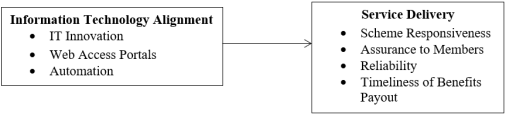
Figure 1 presents the conceptual framework depicting the linkage between the study’s independent variables and the dependent variable.
Figure 1. Conceptual Framework.
In this study, information technology alignment is operationalized through IT innovation, web access portals, and automation. IT innovation reflects the extent to which schemes adopt and leverage new digital solutions to enhance operational efficiency and service effectiveness. Web access portals represent digital platforms through which members access information, submit requests, and interact with scheme administrators, thereby influencing convenience, transparency, and responsiveness. Automation refers to the use of technology to streamline routine processes, reduce manual intervention, and minimize errors, particularly in benefit processing and record management. Service delivery constitutes the dependent variable and is operationalized through scheme responsiveness, assurance to members, reliability, and timeliness of benefits payout. Scheme responsiveness captures the ability of schemes to address member inquiries and service requests promptly. Assurance to members reflects the level of confidence, trust, and security that members perceive in the management of their retirement benefits. Reliability relates to the consistency and accuracy of service processes, while timeliness of benefits payout measures the efficiency with which retirement benefits are processed and disbursed.
6. Research Methodology
The proposed study adopted descriptive research design. According to Kothari (2004), this approach describes natural occurrence of a phenomenon documenting its facets in a situation as it is without interfering with the conditions. This design was considered appropriate for this study as it describes a phenomenon without attempting to change the conditions or behaviour. This approach was adopted in the current study by acquiring information from respondents to describe existing phenomena concerning strategic alignment and service delivery. This design has been replicated in various extant literature .
A sample survey was conducted to gather significant information concerning strategic alignment and service delivery. Sample size determination towards this end was computed using Yamane formula as follows;
n = N/ (1 + N(e)2)
Where;
n = Sample size
N = Population size
e = Level of precision
Using a population size of 290 subjects, together with a 5 percent level of precision, the study sample size was determined as;
n = 290 / (1 + 290(0.05)^2)
= 290 / (1 + 290 × 0.0025)
= 290 / (1 + 0.725)
= 290 / 1.725
≈ 168.12
n=168
Therefore, the sample size was rounded to the nearest whole number: n = 168. The sampling technique employed was be clearly defined based on the nature of the population. Sampling techniques based on probability, including stratified random sampling and simple random sampling, can be utilized to guarantee that each individual within the population possesses an equal and identifiable likelihood of selection. This approach strengthens the representativeness of the sample and improves the extent to which the results can be generalized to the broader population.
Therefore the sampling factor (k) for the study will be,
k = n/N
= 168/290
= 0.58
Stratified simple random sampling was incorporated in selecting of a fair representative of the selected occupational retirement benefit schemes from the population size, where all management cadres will be observed. A fair population study representation was guaranteed by simple random sampling when the study population is fairly uniform in the features of interest.
Table 1. Distribution of the Sample Size.

Category

Target Population (N)

Sampling Factor (k=n/N)

Sample Size

Percentage

Senior Management

35

0.58

20

12%

Middle Management

83

0.58

48

30%

Lower Management

172

0.58

100

58%

Total

290

168

100%

Source: Researcher (2025)
Table 2. Reliability Statistic.

Constructs

No. of Items

Alpha Score

Remarks

Information Technology Alignment

10

0.832

Reliable

Service Delivery

8

0.805

Reliable

Overall Score

18

0.822

Reliable

Source: Pilot Study Observations (2025)
Table 1 presents the study sample drawn from different management tiers within selected occupational retirement benefits schemes in Kenya. To ensure fair representation across the categories, a stratified random sampling approach was employed. The total population of 290 employees was stratified into three groups: two middle management categories and lower management. Applying a sampling factor of 0.58, the overall sample size was determined to be 168 respondents, representing 100% of the selected sample. Specifically, 20 respondents (12%) were drawn from the first middle management category, while 48 respondents (30%) were selected from the second middle management group. The remaining 100 respondents (58%) were drawn from lower management. This stratification approach ensured that each management level was represented proportionately according to its size in the total population, thereby enhancing the representativeness, reliability, and accuracy of the study findings.
The study used a structured questionnaire to collect primary data. A structured questionnaire according to Mugenda and Mugenda is an appropriate research instrument in collecting responses that are standardized therefore ensuring consistency and efficiency of data collection. Responses from various respondents were measured using a 5-point Likert scale indicating their level of perception of each statement in various sections of the instrument. The research instrument has a general information section and a specific information section. The general information section sought demographic features of the respondents and the specific information section sought to obtain information based on the research study objective of information technology alignment and service delivery.
Validity was ensured through face, content, and constructs validation techniques. Face validity was established by consulting experts in strategic management to confirm that the instrument appeared relevant, clear, and feasible . Content validity was achieved by reviewing the instrument to ensure it adequately represented the full scope of the constructs under study, with expert input from the supervisor and departmental reviewers . Construct validity was reinforced through a thorough examination of relevant theoretical and empirical literature on information technology alignment, and service delivery, ensuring that the questionnaire items accurately captured the intended research variables .
Reliability was assessed by examining the internal consistency of the research instrument using Cronbach’s alpha coefficient . A minimum Cronbach’s alpha value of 0.7 was adopted in this study as the threshold for acceptable reliability, ensuring that the instrument consistently measured the intended constructs across items and respondents .
The study constructs demonstrated strong internal consistency, with all Cronbach’s alpha coefficients exceeding the recommended threshold of 0.70 . Information technology alignment recorded a higher alpha score (α = 0.832), while external environment alignment had the lowest (α = 0.789), and service delivery yielded alpha coefficient of 0.805. The overall Cronbach’s alpha of 0.822 confirms that the instrument was reliable, stable, and suitable for collecting data relevant to the study objectives .
Data collection process commenced upon receiving authority letter from the Department of Business Administration, and research permit from the NACOSTI. Research consent was sought from the participants upon receiving the research permit through the human resource division of occupational retirement benefits schemes. Printed copies of the introductory letter were issued alongside questionnaire copies using drop-and-pick later method. Reliable contact persons were identified to facilitate questionnaire issuing, follow up and collection from the various management staff in the occupational retirement benefits schemes.
Descriptive statistics, including frequencies, percentages, means, and standard deviations, were used to summarize the demographic characteristics of respondents and the key study variables thus information technology alignment, and service delivery. To examine the relationships between variables and test the study hypotheses, inferential analysis was conducted using multiple linear regression, with service delivery regressed on the independent variables as outlined in the study model presented as:
Y=β01X+ε(1)
Where:
Y = Service Delivery
X = Information Technology Alignment
β₀, β₁= Beta Coefficients
ε = Error Term
Inferences derived from the current study were determined at a five percent significant level. Results were presented in form of tables, figures and charts.
The guiding ethical, rules and principle requirements for conducting academic research were followed to communicate the study research objective. Respectful and acceptable language was used when formulating the questionnaire and also when interacting with the research participants. The documentations thus the research permit and informed consent was used in line with the ethical requirements while conducting research. High objectivity, confidentiality and integrity was upheld on information collected from the respondents. Data entry and analysis was managed objectively to provide a reflection of the precise nature in the relationship existing between information technology alignment and service delivery.
7. Descriptive Results
This section presents the analysis and discussion of the response rate, the average scores obtained from the sample, and the corresponding standard deviation.
7.1. Response Rate
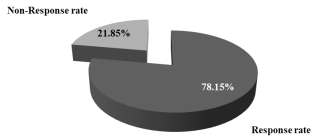
The researcher distributed 151 printed copies of the data collection instrument to the selected management employees across the 4 occupational retirement benefits schemes in Kenya that participated in the empirical investigation. Upon the completion of the stipulated period, a total of 118 duly completed questionnaires were retrieved.
Source: Field Observations (2025)

Download: Download full-size image

Figure 2. Response Rate.
From the 151 distributed questionnaires given to the earmarked management personnel from the four occupational retirement benefits schemes in Kenya, 118 were filled out properly and returned. This gave a response rate of 78.15 percent. Hence, the non-response rate was 21.85 percent. Mugenda and Mugenda view a response rate of 70 percent or above as excellent for reliable inferences about a population drawn from a sampled group. Likewise, Baruch and Holtom , claim that the response rate of more than 60 percent is acceptable in organizational research as it sufficiently reduces the chance of the non-response bias. Therefore, the response rate being a little above this threshold was considered good enough to produce findings that are not only credible but also generalizable to the entire context of occupational retirement benefit schemes in Kenya.
7.2. Descriptive Results for Information Technology Alignment
The technological foundation and digital tools that are found within an organization and that are meant to provide operational efficiency and communication enhancement are regarded as information technology capability. This component comprises of information technology innovation, access portals on the web and automation that are used by the chosen occupational retirement benefits schemes to carry out their operational processes, communicate effectively, and make strong decisions. The observations that have been made as a result of the evaluation of these chosen aspects have been summarized and are presented in Table 3.
Table 3. Descriptive Results for Information Technology Alignment Dimension.

Statements

N

Mean

Std. Deviation

CV

IT Innovation

The Retirement benefits scheme adopts modern IT innovations to improve service delivery.

118

3.64

0.75

21%

IT innovations have made clear communication with the scheme easier.

118

4.24

0.71

18%

The scheme updates regularly its IT systems to improve operations.

118

3.88

1.01

26%

The scheme uses IT innovations to enhance transparency in service delivery.

118

4.01

0.84

21%

Aggregate Scores for IT Innovation

3.94

0.83

21.5%

Web Access Portals

The scheme has reliable web access portals for members to check their benefits.

118

3.89

1.08

28%

Members can conveniently access their benefits information through online platforms.

118

4.11

1.12

27%

Web access portals are accessible to all members.

118

4.21

1.11

26%

Web access portals are user-friendly to all members.

118

4.07

0.71

17%

Aggregate Scores for Web Access Portals

4.07

1.00

24.5%

Automation Automated systems are used to process members’ claims efficiently.

118

4.12

0.88

21%

Automation has improved the speed of benefits processing.

118

3.75

0.92

25%

Aggregate Scores for Automation

3.94

0.90

23%

Overall Scores for Information Technology Alignment

118

3.99

0.92

23.06%

Source: Field Observations (2025)
According to the findings summarized in Table 3, the use of information technology alignment is highly prevalent in the administration of occupational retirement benefit schemes. The overall average score of 3.99 accompanied by a standard deviation of 0.92 and a coefficient of variability of 23.06% signify a strong consensus among the participants that the integration of IT has led to improved service delivery. The presence of moderately varied responses indicates solid agreement among the participants and also suggests that they have a similar view on technology-based operations.
The statement that IT innovations have made communication with the scheme easier scored the highest at 4.24, which means that the very strong agreement regarding the digital tools has already become a transparent interaction with the members and, this suggests even more. In parallel, high averages for automated claims processing of 4.12 and accessible web portals of 4.21 are pointing out that the both of the processes have been sped up and improved when it comes to the access to the information of the members due to the fact of automation. On the other hand, the lowest average of 3.64 for an adoption of modern IT innovations indicates that the usage of technology is apparent but the acceptance of the latest innovations is still slow.
Overall, the results show that IT alignment has considerably fortified the areas of transparency, reliability, and promptness in service delivery. This is in line with the argument of Salles et al. that alignment between IT and organizational strategy leads to better service delivery. Henceforth, the continuous technological upgrading and the adoption of innovations would be the two most important factors that would determine the efficiency and member satisfaction level within occupational retirement benefits schemes.
7.3. Descriptive Results for Service Delivery
Table 4. Descriptive Results on Service Delivery.

Statement

N

Mean

Std. Deviation

CV

Scheme Responsiveness

Our scheme meets customer expectation in terms of service delivery

118

3.92

1.29

21%

The scheme addresses consumer complaints improving satisfaction level

118

4.11

1.07

25%

Aggregate Scores on Scheme Responsiveness

4.02

0.92

23.5%

Assurance to Members

The scheme assures members of the safety of their retirement savings.

118

3.84

1.11

20%

Staffs are knowledgeable to address member concerns.

118

3.97

0.92

17%

Aggregate Scores for Assurance to Members

3.99

1.02

25.5%

Reliability

Members can rely on the accuracy of information provided by the scheme.

118

4.08

0.86

21%

The scheme consistently meets its service delivery commitments.

118

4.16

1.08

26%

Aggregate Scores on Reliability

3.99

1.14

29.8%

Timelines of Benefits Payout

Timely benefits payout enhance member satisfaction

118

3.97

0.98

0.247

Benefits payouts are made within the promised timelines.

118

3.86

1.16

0.301

Aggregate Scores on Timelines of Benefits Payout

4.12

0.97

23.5%

Overall Scores on Service Delivery

118

4.01

0.91

22.75%

Source: Field Observations (2025)
Service delivery represents a multidimensional concept that measures the ability and quality of retirement benefits schemes in terms of their members’ needs through the provision of satisfying services. In this research, the concept was realized in terms of four principal dimensions which were responsiveness, assurance to the members, reliability, and benefit payment timeliness. The observations made on these aspects, framed as indicators of service delivery, have been analyzed, and summarized in Table 4.
The results presented in Table 4 indicate that the respondents gave a very high rating to the quality of service delivery of their schemes with an overall mean of 4.01 and a co-efficient of variability of 22.75%. This also means that there was a general agreement in the responses. Thus, it can be concluded that the pension schemes have done a good job in providing reliable, prompt, and customer-oriented services.
The statement with the highest rating pointed out that benefits payouts are made within the promised timelines with a mean of 4.16 and a std. deviation of 1.08. This implies that quick payment of benefits is still the main reason for member satisfaction. This result backs up Kiptoo and Njeru who suggested that quick service delivery in pension schemes increases trust and cultivates long-term member loyalty. Additionally, the mean score of 4.11 which was given to the statement about the scheme responding promptly to member inquiries underlines the importance of responsiveness as a service quality dimension, one that is in line with Karanja and Omboi who pointed out that responsiveness has a big impact on perceived service quality in the financial sector.
On the other hand, mean ratings such as the members can trust the information the scheme gives them, which has a mean of 3.84, and the scheme tells members their retirement savings are safe hence a mean of 3.98 indicate that these areas need improvement in terms of transparency and communication. Mutua and Wambua assert that reliability and assurance are the cornerstones of the SERVQUAL model that directly influence customer’s trust towards both financial and pension services. The overall results imply that the programs have excellent service performance across the board in terms of time, being responsive, and staff competence, yet there is still a need to improve the precision of information spreading and the provision of assurance mechanisms that would help in boosting the general trust and satisfaction of the members.
8. Inferential Analysis
The influence of information technology alignment on service delivery was examined through a simple regression model, and the results are presented in Table 5. A simple linear regression model was appropriately was given focus in the study on a single thus information technology alignment as composite predictor, and its effect on service delivery.
Table 5. Simple Linear Regression Results.

Model

R

R Squared

Adjusted R Squared

Std. Error of Estimate

the

Durbin- Watson

1

0. 742 a

0.551

0.547

0.278

2.104

F-Statistics
Table 6. F- Statistics.

Model

Sum of Squares

df

Mean Square

F

Sig.

1

Regression

7.228

1

2.08

12.22

.001b

Residual

24.106

116

.182

Total

31.282

117

Dependent Variable: Service Delivery
Predictor: (Constant), Information Technology Alignment
Source: Field Observations (2025)
The regression analysis put forth in the model summary indicates that the correlation coefficient (R) value of 0.742 is indicative of a strong positive linear relationship among information technology alignment and service delivery within the context of the selected occupational retirement benefits schemes in Kenya. This means that if information technology alignment get better, the service delivery outcomes will get better too. The adjusted R squared value of 0.482 indicates that the alignments of information technology contribute to 48.2 percent of the total variance in service delivery. This means that almost half of the changes in service delivery performance can be attributed to information technology alignment while the rest may be due to other factors not included in the current model. The standard error of estimate (0.27842) shows the degree of variability between the actual and predicted values, thus indicating a fairly good level of accuracy in the model's forecasting. Also, the Durbin-Watson statistic of 2.104 points to the nonexistence of major autocorrelation in the residuals, hence validating the model's trustworthiness.
The F-test results shown in Table 5 points to an F-statistic of 12.22 and a p-value of 0.001, which is very much lower than the 0.05 significance level. Thus, these findings substantiate the view that the proposed regression model not only fits well but is also statistically significant in predicting service delivery through the information technology alignment. Hence, it can be concluded that the effect of information technology alignment is indeed significant on the service delivery of the selected occupational retirement benefits schemes in Kenya.
Table 7. Coefficients of Regression Analysis.

Unstructured Coefficients

Standardized Coefficients

T

Sig.

B

Std. Error

Beta

Constant

.484

.289

1.872

.045

Information Technology Alignment

.269

.071

.284

2.611

.015

Dependent Variable: Service Delivery
Predictor: (Constant), Information Technology Alignment.
Source: Field Observations (2025)
The statistical results of the regression analysis reveal that the parameters obtained from the unstandardized coefficient values produced the estimated model presented.
Service Delivery = β0 + β1 (Information Technology Alignment)
Service Delivery =.499 +.261 (Information Technology Alignment)
The model shows that the minimum level of service delivery, which is indicated by the intercept, is 0.499 when the predictor variable is set to zero. In other words, this statistical result is significant at p = 0.042. This y-intercept reflects the service delivery that is estimated to be the same as that without influence of any of information technology alignment.
When the model with information technology alignment as a predictor variable is considered, a coefficient of 0.269 for information technology alignment is indicated by the model when other factors are all kept at zero. This implies that a unit rise in the alignment of information technology would lead to a rise of 0.269 in service delivery. The relationship is deemed to be statistically significant, as shown by a p-value of 0.015. So, it can be concluded that information technology alignment has a positive impact on service delivery in the case of occupational retirement benefits schemes. Empirical evidence from Mabotja and Mkhomazi and Kepha, Peterson, and Kate backs up these findings by showing that IT alignment plays a positive role in service delivery in public and state-owned institutions. Furthermore, the result is in line with the Strategic Alignment Model that states that when IT is in tune with the organizational strategy, it results in operational efficiency and better performance.
9. Conclusion and Recommendation
With respect to the first objective, the study was designed to find out the impact of IT alignment on the delivery of services in the occupational retirement benefits schemes sector in Kenya. The results indicated that IT alignment has a significant positive effect on the delivery of services. It means that when the technological system and the processes are in good alignment with the organization's objectives, there will be an increase in efficiency, accuracy, and responsiveness of service delivery. The researcher, after observing this, concluded that service delivery in occupational retirement financial benefits schemes is greatly affected by the alignment of information technology.
Concerning this investigation on the role of information technology alignment in service delivery, management ought to draft plans that ensure the most effective integration of information systems with service processes. The setting up of solid digital infrastructures, the bolstering of cyber-security measures and the staff training in new technologies to speed up and improve the quality of the services will achieve this. Moreover, top management should support the automation of the administrative and benefits processing systems so as to eliminate mistakes, decrease the time of processing and enhance the overall satisfaction of the client. Furthermore, the creation of IT support units that are constantly available and ready to help would add to the reliability of digital services.
10. Limitations and Suggestions for Further Research
This study focused on information technology alignment as the primary explanatory factor influencing service delivery among selected occupational retirement benefits schemes in Kenya. By concentrating on this single strategic dimension, the study did not exhaustively examine other strategic management factors that may also shape service delivery outcomes. In addition, some aspects of organizational strategy and operational practices are institutionally sensitive, which may have limited the extent of information respondents were willing to disclose, despite assurances of confidentiality and the use of data strictly for academic purposes. Further, the study was confined to selected occupational retirement benefits schemes operating within the Kenyan context. As such, the findings reflect the institutional, regulatory, and operational characteristics of this sector and may not be directly generalizable to organizations in other sectors or jurisdictions.
Abbreviations

CAJ

Commission of Administration of Justice

GDP

Gross Domestic Product

GoK

Government of Kenya

KNBS

Kenya National Bureau of Statistics

NACOSTI

National Commission for Science, Technology and Innovation

NSSF

National Social Security Fund

OECD

Organisation for Economic Co-operation and Development

RBS

Retirement Benefits Schemes

Author Contributions
Victor Nyaga Njeru: Conceptualization, Methodology, Funding acquisition, Data curation, Writing – original draft
Godfrey Kinyua: Supervision, Validation
Conflicts of Interest
The authors declare no conflicts of interest.
References
[1] Abowitz, D. A., & Toole, T. M. (2010). Mixed method research: Fundamental issues of design, validity, and reliability in construction research. Journal of construction engineering and management, 136(1), 108-116.
[2] Adadan, E., & Savasci, F. (2012). An analysis of 16–17-year-old students' understanding of solution chemistry concepts using a two-tier diagnostic instrument. International Journal of Science Education, 34(4), 513-544.
[3] Agarwal, P., Verma, A., & Malhotra, S. K. (2021). An Analysis on Perceived Service Quality and Students’ Satisfaction of E-learning During Covid-19 in Higher Education. The Online Journal of Distance Education and e-Learning, 9(3), 341.
[4] Andersson, M., Boateng, K., & Abos, P. (2024). Validity and reliability: the extent to which your research findings are accurate and consistent.
[5] Alcoba, J. (2014). Strategic alignment in business education: the second magic bullet. Journal of Education for Business, 89(3), 119-125.
[6] Al Khalifa, M. M. (2016). The impact of strategic alignment on the performance of public organisations (Doctoral dissertation, Brunel University London).
[7] Angulo-Ruiz, F., Pergelova, A., & Wei, W. X. (2019). How does home government influence the internationalization of emerging market firms? The mediating role of strategic intents to internationalize. International Journal of Emerging Markets, 14(1), 187-206.
[8] Al-Hazmi, A. A. (2022). Strategic environmental alignment and organizational adaptability in dynamic markets. Journal of Strategy and Management, 15(4), 687–702.
[9] Ata-Agboni, J. U., & Noah, H. (2024). Implementation of Health Service Delivery Component of the National Strategic Health Development Plan in Kogi State, Nigeria (2018-2022). Journal of Good Governance and Sustainable Development in Africa, 8(5), 1-18.
[10] Avison, D., Jones, J., Powell, P., & Wilson, D. (2004). Using and validating the strategic alignment model. The Journal of Strategic Information Systems, 13(3), 223-246.
[11] Baker, J., Jones, D., Cao, Q., & Song, J. (2011). Conceptualizing the dynamic strategic alignment competency. Journal of the Association for Information Systems, 12(4), 2.
[12] Barney, J. (1991). Firm resources and sustained competitive advantage. Journal of Management, 17(1), 99-120.
[13] Barr, N., & Diamond, P. (2015). Italy’s pension reforms: facing the facts. Italy 24, 15.
[14] Baruch, Y., & Holtom, B. C. (2008). Survey response rate levels and trends in organizational research. Human relations, 61(8), 1139-1160.
[15] Bhardwaj, B. (2019). Role of knowledge management in enhancing the entrepreneurial ecosystems through corporate entrepreneurship and strategic intent in high-tech firms. Journal of the Knowledge Economy, 10(4), 1831-1859.
[16] Bitner, M. J., Faranda, W. T., Hubbert, A. R., & Zeithaml, V. A. (1997). Customer contributions and roles in service delivery. International Journal of Service Industry Management, 8(3), 193-205.
[17] Bitner, M. J., Ostrom, A. L., & Morgan, F. N. (2008). Service blueprinting: a practical technique for service innovation. California management review, 50(3), 66-94.
[18] Blenko, M., Garton, E., Mottura, L., & Wright, O. (2014). Winning operating models that convert strategy to results. Bain Brief.
[19] Bogdanova, M., & Parashkevova, E. (2016). Model of Strategic Alignment in the Universities. Science. Business. Society., 1(1), 6-9.
[20] Brush, C. G., Manolova, T. S., & Edelman, L. F. (2008). Separated by a common language? Entrepreneurship research across the Atlantic. Entrepreneurship Theory and Practice, 32(2), 249-266.
[21] Buttle, F. (1996). SERVQUAL: review, critique, research agenda. European Journal of marketing, 30(1), 8-32.
[22] Bureau of Labor Statistics. (2024). Employee statistics in the United States, March 2024. (BLS Publication No. USDL-24-1921). US Department of Labor.
[23] Campbell, B., Kay, R., & Avison, D. (2005). Strategic alignment: a practitioner's perspective. Journal of Enterprise Information Management, 18(6), 653-664.
[24] Charan, K. S., & Banana, K. (2024). Service quality dimensions in banking: a comprehensive literature review. Journal of Advanced Research in Service Management 7(1), 1-5.
[25] Chebet, J. (2015). Determinants of employees’ performance in the County Governments of Kenya; a case of Bungoma County (Doctoral dissertation, University of Nairobi).
[26] Choudhury, S. (2021). A sustainable Customer Satisfaction Model based on new dimensions of SERVQUAL & SERVPERF in today’s Telecom world: An empirical approach. In Workshop on Computer Networks & Communications (Vol. 2889, pp. 174-184).
[27] Christabel, N. (2018). The influence of strategic management practices on service delivery in the County Government of Nairobi, Kenya (Doctoral dissertation, Kabarak University).
[28] Cohen, R. J., Swerdlik, M. E., & Phillips, S. M. (2021). Psychological testing and assessment. McGraw-Hill US Higher Ed USE.
[29] Commission on Administration of Justice. (2025, February 13). Ombudsman calls for the overhaul of Kenya’s pension system to address decades-long delays and injustices [Press release].
[30] Damachi, U. G. (1978). Human relations school in theories of management and the executive in the developing world (pp. 21-33). London: Palgrave Macmillan UK.
[31] Danjuma, I., & Rasli, A. (2012). Imperatives of service innovation and service quality for customer sarisfaction: perspsective on higher education. Social and Behavioral Sciences 40 (2012) 347 – 352.
[32] Fieldman, M. S., & Pentland, B. T. (2022). Routine dynamics: Toward a critical conversation. Strategic Organization, 20(4), 846-859.
[33] Gandhi, S., Sachdeva, A., & Gupta, A. (2018). Measuring service quality using SERVQUAL: A study of public and private sector services. International Journal of Quality and Reliability Management, 35(6), 1234–1252.
[34] Gasela, M. M. (2021). The impact of strategy alignment on organisational performance in national public entities in the Northern Cape Province of South Africa. Africa’s Public Service Delivery and Performance Review, 9(1), 489.
[35] George, D., & Mallery, P. (2010). SPSS for Windows step by step: A simple guide and reference, 14.0 update.
[36] Ghonim, M. A., Khashaba, N. M., Al-Najaar, H. M., & Khashan, M. A. (2022). Strategic alignment and its impact on decision effectiveness: a comprehensive model. International Journal of Emerging Markets, 17(1), 198-218.
[37] Gomathy, C. K., Sarma, M. V., & Reddy, M. V. (2023). Organizational behavior trends and decision making. International Journal of Scientific Research in Engineering and Management, 07(5), 1-9.
[38] Hair, J. F. (2014). A primer on partial least squares structural equation modeling (PLS-SEM). sage.
[39] Haming, M., Murdifin, I., Syaiful, A. Z., & Putra, A. H. P. K. (2019). The application of SERVQUAL distribution in measuring customer satisfaction of retails company. Journal of Distribution Science, 17(2), 25-34.
[40] Henderson, J. C., & Venkatraman, N. (1989). Strategic alignment: a framework for strategic information technology management.
[41] Hill, A., & Brown, S. (2007). Strategic profiling: A visual representation of internal strategic fit in service organisations. International Journal of Operations & Production Management, 27(12), 1333-1361.
[42] Hinrichs, K. (2021). Recent pension reforms in Europe: More challenges, new directions: an overview. Social Policy & Administration, 55(3), 409-422.
[43] Hrebiniak, L. (2008). Making strategy work: Overcoming the obstacles to effective execution. Ivey Business Journal, 72(2), 1-6.
[44] Hrebiniak, L. G., & Joyce, W. F. (2005). Implementing strategy: An appraisal and agenda for future research. The Blackwell Handbook of Strategic Management, 605-629.
[45] Huck, S. W. (2025). Reading statistics and research. Pearsons. Boston.
[46] Jacobsen, D. I., & Johnsen, A. (2020). Alignment of strategy and structure in local government. Public Money & Management, 40(4), 276-284.
[47] Johnson, V., Ellis, R. S., & Hutcherson, V. (2020). Evaluating a strategy for implementation and sustainability of school-based health centers in 3 disparate communities. Journal of School Health, 90(4), 286-294.
[48] Kalogiannidis, S., Chatzitheodoridis, F., Papaevangelou, O., & Mavrommati, A. (2023). Management information technology and quality service delivery in government institutions. WSEAS Transactions on Business and Economics, 20, 1074-1099.
[49] Kaplan, R. S., & Norton, D. P. (2001). Transforming the balanced scorecard from performance measurement to strategic management: Part II. Accounting horizons, 15(2), 147-160.
[50] Karanja, L., & Omboi, B. (2023). Responsiveness and service quality in financial institutions: Evidence from Kenyan pension schemes. International Journal of Service Science and Management, 10(2), 44–57.
[51] Kearns, G. S., & Sabherwal, R. (2006). Strategic alignment between business and information technology: a knowledge-based view of behaviors, outcome, and consequences. Journal of management information systems, 23(3), 129-162.
[52] Kepha, G. N., Peterson, M. O., & Kate, L. O. (2022). The effect of information technology governance on the relationship between corporate information technology strategy and service delivery of State Corporations in Kenya. African Journal of Business and Management (AJBUMA), 7(2), 313-330.
[53] Kenya National Bureau of Statistics (KNBS). Economic Survey 2024. Nairobi: KNBS; 2024.
[54] Kenya. International Journal of Managerial Studies and Research (IJMSR), Volume 9, Issue 6, June 2021, PP 39-47. Massachusetts: Addison-Wesley Publishing Company, USA.
[55] Kiprono, B. K., & Kinyua, G. M. (2021). An empirical investigation on the effect of image differentiation on service delivery of selected insurance firms in Nairobi City County, Kenya. International Journal of Managerial Studies and Research, 9(6), 39-47.
[56] Kiptoo, S., & Njeru, A. (2022). Timeliness in service delivery and customer satisfaction in pension management institutions in Kenya. Journal of Business and Economic Development, 7(4), 89–101.
[57] Kombo, D. K., & Tromp, D. L. (2006). Proposal and thesis writing: An introduction. Nairobi: Paulines Publications Africa, 5(1), 814-30.
[58] Kothari, C. R., & Garg, G. (2014). Research methodology: methods and techniques. New Age International. New Delhi.
[59] Kumar, N., & Yakhlef, A. (2014). How capabilities evolve in a born global firm? A case study of an Indian knowledge-intensive service born global firm. Journal of Entrepreneurship in Emerging Economies, 6(3), 223-242.
[60] Lawrence, P. R., & Lorsch, J. W. (1967). Differentiation and integration in complex organizations. Administrative science quarterly, 1-47.
[61] Lichtsteiner, A., Karavdic, S. D., & Delafrooz, F. (2022). Influence of information technology on service delivery among the public customer care centers in Switzerland. Journal of Information and Technology, 6(1), 9-18.
[62] Luftman, J., Lyytinen, K., & Zvi, T. B. (2017). Enhancing the measurement of information technology (IT) business alignment and its influence on company performance. Journal of Information Technology, 32(1), 26-46.
[63] Mabotja, S. P., & Mkhomazi, S. S. (2024). Information and communication technology as an enabler to contact centre service delivery: A case of a public sector. South African Journal of Information Management, 26(1), 1720.
[64] Magut, C. K., & Kinyua, G. M. (2022). Learning orientation as an antecedent of service delivery: A review of literature. International Journal of Managerial Studies and Research, 10(5), 22-40.
[65] Makhubela, O., & Thela, T. (2020). A journey to reform the retirement system: South Africa’s experience and perspective. Retirement Funds Supervision Financial Sector Conduct Authority.
[66] Mbulwa, J., & Kinyua, G. M. (2021, March). The role of strategy formulation on service delivery: a perspective of Turkana County in Kenya. International Journal of Innovative Research and Advanced Studies, 8(3), 16-23.
[67] McIlrath, B. (2002). Process alignment for strategic implementation. In IIE Annual Conference. Proceedings (p. 1). Institute of Industrial and Systems Engineers.
[68] Mintzberg, H., & Waters, J. A. (1985). Of strategies, deliberate and emergent. Strategic Management Journal, 6(3), 257-272.
[69] Moses, R. N., & Yamat, H. (2021). Testing the validity and reliability of a writing skill assessment. International Journal of Academic Research in Business and Social Sciences, 11(4), 202-208.
[70] Mugenda, O. M. & Mugenda A. G. (2003). Research methods, quantitative, qualitative and mixed methods approaches. ACT. Nairobi.
[71] Muithya, V. M., Muathe, S., & Kinyua, G. (2022). Undoing performance in micro finance institutions: Reflections on regulatory framework in Kenya. The Journal of Entrepreneurial Finance (JEF), 24(2), 1-13.
[72] Murungi, N. K., & Kinyua, G. M. (2024). The Predictive Role of Organizational Vision on Performance of Medium-Sized Manufacturing Enterprises in Kenya. International Journal of Education and Research, 12(4), 11-28.
[73] Muthamia, N. M., & Kilika, J. (2022). Towards a theoretical model for learning organization strategy towards improved service delivery: A review of literature. International Research Journal of Economics and Management Studies IRJEMS, 1(2).
[74] Muthaura, M. K. & Kinyua, G. M. (2021). Analysis of the Role of Technological Alignment on Organization Performance: A Perspective of Commercial Banks in Nyeri County, Kenya. International Journal of Innovative Research and Advanced Studies, 8(6): 9–14.
[75] Muthoni, D. M., & Kinyua, G. M. (2020). Corporate reputation and firm performance: An empirical analysis of motor vehicle assemblers in Nairobi City County, Kenya. Journal of Business and Economic Development, 5(2), 73-81.
[76] Mutua, M., & Wambua, P. (2021). Service quality dimensions and customer satisfaction among pension scheme members in Kenya. African Journal of Business Research, 9(1), 72–85.
[77] Muwonge, A., Williamson, T. S., Owuor, C., & Kinuthia, M. (2017). Making devolution work for service delivery in Kenya. World Bank.
[78] Mwangi, R. (2020). Strategic management practices and performance of retirement benefits schemes in Kenya (Doctoral dissertation, UoN).
[79] Mwarenge, J., & Kinyua, G. (2022). Reliability assessment of instruments for measuring service delivery in Kenyan occupational retirement benefit schemes (Unpublished master’s thesis). Kenyatta University, Nairobi, Kenya.
[80] Mwikali, T. J., & Ndung’u, P. K. (2022). Strategic alignment with the business environment and its effect on customer-centric service delivery in private enterprises. Journal of Business and Innovation Strategy, 9(1), 22–38.
[81] National Pension Commission (PENCOM). (2021). Annual report on the regulation and supervision of the pension industry in Nigeria. National Pension Commission, Abuja, Nigeria.
[82] Nguya, F. N., & Kinyua, G. M. (2023). The predictive role of transformational capability on service delivery of registered water service providers in Nairobi City County, Kenya. International Journal of Education and Research, 11(10), 85-98.
[83] OECD (2021), Pensions at a glance 2021: OECD and G20 Indicators, OECD Publishing, Paris.
[84] OECD (2024), Pension Markets in Focus 2024, OECD Publishing, Paris.
[85] Ojiambo, P., & Kinyua, G. (2022). Assessing instrument reliability and validity in research on strategic alignment and service delivery. Journal of Management and Development Studies, 15(2), 77–88.
[86] Oluwatayo, J. A. (2012). Validity and reliability issues in educational research. Journal of educational and social research, 2, 391.
[87] Owen, M. (1991). Managing service quality. International Journal. Vol. 1 Iss 1 pp. 57–5.
[88] Parasuraman, A. B., Zeithaml, V. A., & Berry, L. (1988). SERVQUAL: A multiple-item scale for measuring consumer perceptions of service quality. 1988, 64(1), 12-40.
[89] Ragul, V. (2021). Strategic leadership and service delivery in organizations: A critical review of literature. AfricArXiv Preprints.
[90] Rani, S., & Kaur, R. (2025). Service Quality Models: A Literature Review.
[91] Retirement Benefits Authority. (2006). Annual Report 2005–2006. Retirement Benefits Authority, Nairobi, Kenya.
[92] Retirement Benefits Authority. (2025). Statistical Digest 2024: Kenyan Pension Industry Shows Strong Growth and Resilience. Industry Performance Reports, Retirement Benefits Authority, Nairobi, Kenya.
[93] Rick, V. & Wolfgang, H. G. (2013). The Dynamic Capability View in Strategic Management: A Bibliometric Review. International Journal of Management Reviews, 15, 426–446.
[94] Roberts, K, & Patel, S. (2017). Cutting-edge medical technologies in quaternary hospitals: Opportunities and challenges. Journal of Biomedical Innovations, 19(2), 78-92.
[95] Sagwa, E. V. (2021). Service quality dimensions and customer trust in financial institutions in Kenya. International Journal of Finance and Banking Studies, 10(3), 45–58.
[96] Saldanha, T. J., Lee, D., & Mithas, S. (2020). Aligning information technology and business: The differential effects of alignment during investment planning, delivery, and change. Information Systems Research, 31(4), 1260-1281.
[97] Salihu, A., & Khalil, S. (2011). Service delivery by local Government in Nigeria. Saarbruken. Lap Lambert Academic Publishing.
[98] Sekere, K. (2023). Influence of strategic management practices on the performance of small medium manufacturing enterprises in Kenya. United States University.
[99] Shah, A., Roberts, A., Huther., Andrews., Hatry., Kitchen., Soucat., & Esfahani (2005). Public services delivery. World Bank.
[100] Siso, C., & Sangoro, O. (2023). Influence of Strategic Alignment on Service Delivery Among Private Hospitals in Kisumu County, Kenya. Journal of Business, Economics and Management Research Studies, 1(2), 75-83.
[101] Srivastava, A. K. (2017). Alignment: the foundation of effective strategy execution. International Journal of Productivity and Performance Management, 66(8), 1043-1063.
[102] Street, C., Gallupe, B., & Baker, J. (2018). The influence of entrepreneurial action on strategic alignment in new ventures: Searching for the genesis of alignment. The Journal of Strategic Information Systems, 27(1), 59-81.
[103] Tafti, F. F., Abdolvand, N., & Harandi, S. R. (2019). A strategic alignment model for collaborative open innovation networks. International Journal of Business Innovation and Research, 19(1), 1-28.
[104] Teece, D., G. Pisano, and A. Shuen (1997). Dynamic Capabilities and Strategic Management. Strategic Management Journal 18: 509-533.
[105] Teece, D. J. (2007). Explicating dynamic Capabilities: The Nature and Micro Foundations of Sustainable) Enterprise Performance. Strategic Management Journal, 28(13): 1319-1350.
[106] U.S. Bureau of Labor Statistics. (2024). Employee Benefits in the United States March 2024: National Compensation Survey [News release]. U.S. Department of Labor.
[107] Wambui, S. K., Kahuthia, J., & Wandiga, E. N. (2023). International Journal of Business and Management, 11(9), 1-6.
[108] Yamane, T. (1967). Statistics: An Introductory Analysis. 2nd Edition. New York: Harper and Row.
Cite This Article
  • APA Style

    Njeru, V. N., Kinyua, G. (2026). Information Technology Alignment as an Institutional Lever for Service Excellence: Evidence from Occupational Retirement Benefits Schemes in Kenya. European Business & Management, 12(1), 1-15. https://doi.org/10.11648/j.ebm.20261201.11

    Copy | Download

    ACS Style

    Njeru, V. N.; Kinyua, G. Information Technology Alignment as an Institutional Lever for Service Excellence: Evidence from Occupational Retirement Benefits Schemes in Kenya. Eur. Bus. Manag. 2026, 12(1), 1-15. doi: 10.11648/j.ebm.20261201.11

    Copy | Download

    AMA Style

    Njeru VN, Kinyua G. Information Technology Alignment as an Institutional Lever for Service Excellence: Evidence from Occupational Retirement Benefits Schemes in Kenya. Eur Bus Manag. 2026;12(1):1-15. doi: 10.11648/j.ebm.20261201.11

    Copy | Download

  • @article{10.11648/j.ebm.20261201.11,
      author = {Victor Nyaga Njeru and Godfrey Kinyua},
      title = {Information Technology Alignment as an Institutional Lever for Service Excellence: Evidence from Occupational Retirement Benefits Schemes in Kenya},
      journal = {European Business & Management},
      volume = {12},
      number = {1},
      pages = {1-15},
      doi = {10.11648/j.ebm.20261201.11},
      url = {https://doi.org/10.11648/j.ebm.20261201.11},
      eprint = {https://article.sciencepublishinggroup.com/pdf/10.11648.j.ebm.20261201.11},
      abstract = {Occupational retirement benefits schemes are essential in safeguarding the post-retirement financial wellbeing of members which contributes to enhanced economic inclusion and social security. The difference between the rising retirement contributions and the low pension coverage in Kenya indicates that there are service delivery problems, especially in the areas of responsiveness and dependability. Even though reforms are still going on, the problem of delayed benefit payouts and the lack of assurance on membership rights remain as the biggest issues in the pension industry. These problems reveal that the Kenyan occupational retirement benefit schemes are still not responsive, timely and reliable. The main objective of the research was to find out the role of information technology alignment in service provision in selected occupational retirement benefit schemes in Kenya. Specifically, it was to determine how well synchronization of information technology affects service delivery in these schemes. The research is based on the dynamic capabilities theory, and the SERVQUAL model, which together shape the study's conceptual direction. To reinforce the methodological strategy, a descriptive research design was used. The research was focused on four occupational retirement benefit schemes that were active in the Kenyan market with a target population of 290, made up of senior, middle, and junior management. A stratified simple random sampling technique was used to select a representative sample of 168 participants. The validity of the instruments was established using face, content, and construct validation procedures. A pilot test was conducted to assess the reliability and effectiveness of the questionnaire. A structured questionnaire was used to collect primary data. The data obtained was analyzed using both descriptive and inferential statistical methods. Descriptive statistics not only revealed the patterns within the sample but also suggested the use of inferential techniques to apply the findings to the whole population. The survey results were displayed in the form of tables and graphs. The analysis revealed that information technology alignment had a significant impact on service delivery among occupational retirement benefits schemes in Kenya. Results from regression analysis demonstrated that information technology alignment dimension had a positive significant effect on service delivery (β = 0.269, R2 = 0.482, p < 0.05). In order to improve the access and effectiveness of the service, management should concentrate on streamlining the operations and providing service channels that are both affordable and effective.},
     year = {2026}
    }
    

    Copy | Download

  • TY  - JOUR
    T1  - Information Technology Alignment as an Institutional Lever for Service Excellence: Evidence from Occupational Retirement Benefits Schemes in Kenya
    AU  - Victor Nyaga Njeru
    AU  - Godfrey Kinyua
    Y1  - 2026/02/27
    PY  - 2026
    N1  - https://doi.org/10.11648/j.ebm.20261201.11
    DO  - 10.11648/j.ebm.20261201.11
    T2  - European Business & Management
    JF  - European Business & Management
    JO  - European Business & Management
    SP  - 1
    EP  - 15
    PB  - Science Publishing Group
    SN  - 2575-5811
    UR  - https://doi.org/10.11648/j.ebm.20261201.11
    AB  - Occupational retirement benefits schemes are essential in safeguarding the post-retirement financial wellbeing of members which contributes to enhanced economic inclusion and social security. The difference between the rising retirement contributions and the low pension coverage in Kenya indicates that there are service delivery problems, especially in the areas of responsiveness and dependability. Even though reforms are still going on, the problem of delayed benefit payouts and the lack of assurance on membership rights remain as the biggest issues in the pension industry. These problems reveal that the Kenyan occupational retirement benefit schemes are still not responsive, timely and reliable. The main objective of the research was to find out the role of information technology alignment in service provision in selected occupational retirement benefit schemes in Kenya. Specifically, it was to determine how well synchronization of information technology affects service delivery in these schemes. The research is based on the dynamic capabilities theory, and the SERVQUAL model, which together shape the study's conceptual direction. To reinforce the methodological strategy, a descriptive research design was used. The research was focused on four occupational retirement benefit schemes that were active in the Kenyan market with a target population of 290, made up of senior, middle, and junior management. A stratified simple random sampling technique was used to select a representative sample of 168 participants. The validity of the instruments was established using face, content, and construct validation procedures. A pilot test was conducted to assess the reliability and effectiveness of the questionnaire. A structured questionnaire was used to collect primary data. The data obtained was analyzed using both descriptive and inferential statistical methods. Descriptive statistics not only revealed the patterns within the sample but also suggested the use of inferential techniques to apply the findings to the whole population. The survey results were displayed in the form of tables and graphs. The analysis revealed that information technology alignment had a significant impact on service delivery among occupational retirement benefits schemes in Kenya. Results from regression analysis demonstrated that information technology alignment dimension had a positive significant effect on service delivery (β = 0.269, R2 = 0.482, p < 0.05). In order to improve the access and effectiveness of the service, management should concentrate on streamlining the operations and providing service channels that are both affordable and effective.
    VL  - 12
    IS  - 1
    ER  - 

    Copy | Download

Author Information